Quick answer
Al Barsha mixes family villas, mid rise apartment buildings and a dense restaurant scene around the Mall of the Emirates and Al Barsha 1. Hygiene cleans and disinfects villa and building water tanks, services restaurant grease interceptors, and empties and tests basement sump pits, usually the same day as booking during office hours.
Al Barsha sits right next to Al Quoz across Sheikh Zayed Road, which makes it one of the quickest districts for our crews to reach. It is a varied area. Al Barsha 2 and 3 are largely villas, Al Barsha 1 and South are full of mid rise apartment buildings, and the streets around the Mall of the Emirates and the hotels nearby are packed with restaurants, cafés and takeaway kitchens.
That variety means a typical day in Al Barsha might include a villa roof tank in the morning, an apartment building's ground tank at midday, and two restaurant grease traps before evening service.
Apartment buildings and their water tanks
Mid rise buildings in Al Barsha usually have a ground tank feeding rooftop tanks through a pump room. When residents complain about taste, sediment or low pressure, the cause is often a tank that has not been cleaned in over a year, or a pump room sump pit full of sludge. We clean ground and roof tanks in the same visit so the whole system is clean end to end, and check the pump room pit while we are there.
Building management receives photos and notes for every tank, which answers resident questions directly and keeps the six monthly cycle documented.
Restaurant kitchens around the mall and Al Barsha 1
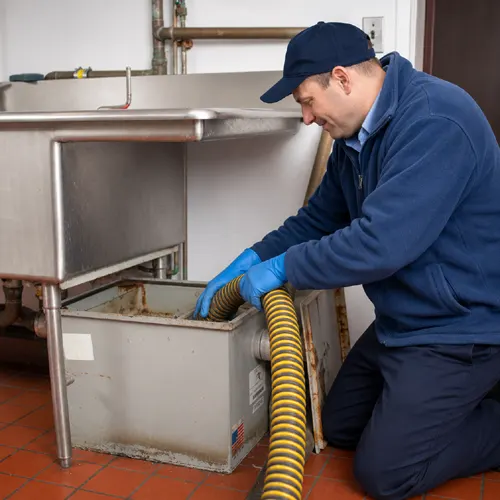
The restaurant streets of Al Barsha 1 are some of the busiest in this part of the city, with many small kitchens running compact under sink grease traps. Small traps fill fast, and one missed month undoes the previous three. We set these kitchens on fixed recurring visits with a reminder before each date, and each visit takes roughly 30 to 60 minutes from lid to refill.
Larger kitchens in hotels and food courts use in ground interceptors that need a tanker. We schedule those around service hours and coordinate with the property's facility team.
Fast access from Al Quoz
Al Barsha is directly across Sheikh Zayed Road from our base, typically 10 to 15 minutes away outside peak traffic, so same day visits are normal during office hours, Saturday to Thursday 7:30 to 18:30. Villa streets and apartment service roads are generally easy for our tankers to reach.
Out of hours problems such as an overflowing interceptor or a backed up building drain go to the 24/7 emergency line on +971 56 864 8994.
Services We Provide in Al Barsha
- Water Tank Cleaning & Disinfection, Sediment removal, full scrubbing and measured chlorine disinfection for roof and ground tanks, so every tap in the property receives water from a clean vessel.
- Grease Trap Cleaning, Full pump out, baffle scrubbing and function check for commercial kitchen grease interceptors, with documented FOG disposal that keeps your establishment compliant.
- Sump Pit Cleaning, Basement and car park sump pits emptied of sludge and sand, washed down, and pump floats checked, so the pumps run the day the water arrives.
Al Barsha Questions
Why does the water in my Al Barsha apartment taste stale?
In most buildings the cause is the storage tank rather than the mains supply. Sediment and biofilm on the tank floor and walls affect taste and odor, especially in summer heat. Ask your building management when the tanks were last cleaned. If it was more than six months ago, a full clean and disinfection of the ground and roof tanks usually resolves it.
How long does a grease trap service take for a small restaurant?
A compact under sink trap typically takes 30 to 60 minutes, including protection of the area, full pump out, scrubbing the baffles, refilling and a function check. In ground interceptors take longer depending on size. We book small kitchens before opening or after close so service is never interrupted.
Can you clean the ground tank and roof tanks in one visit?
Yes, and it is the better approach. Cleaning only one tank leaves sediment in the other to recontaminate the system. We sequence the work so the building keeps water from one tank while the other is cleaned where possible, and provide a separate record for each tank.