
Every tap in your property is only as clean as the tank that feeds it. We drain, scrub, disinfect and rinse so the stored water is worth storing.
Water tank cleaning and disinfection is the draining of a potable water storage tank, physical removal of sediment and biofilm from its floor, walls and ceiling, chemical disinfection of every internal surface with a measured chlorine solution, and a neutralizing rinse before refill. Cleaning without disinfection removes what you can see. Disinfection deals with what you cannot.
Every property with stored water needs it, which in Dubai is nearly every property. Villa roof tanks, ground and roof tanks in apartment buildings, hotel and restaurant storage, school and clinic tanks, labor accommodation and office buildings. The city's dust guarantees sediment, and the heat guarantees that any organic film grows quickly. Left alone, a tank develops a floor layer of silt and biofilm that affects taste and odor, feeds bacterial growth, and slowly degrades every litre passing through. We clean tanks across Dubai from our Al Quoz base, from Jumeirah and Al Barsha villas to Deira building stock, Business Bay towers and worker accommodation citywide.
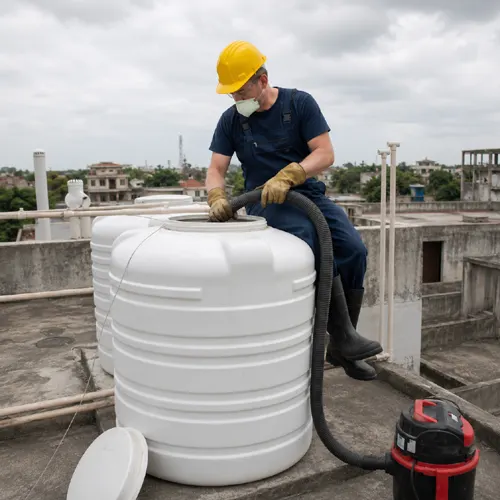
Moving In, or Worried About the Water Today
Two situations should skip the calendar and book now. You have just moved into a property with no cleaning record, or the water has changed in taste, smell or color. Send us the number of tanks and a photo on WhatsApp and we will schedule the earliest slot within working hours, Saturday to Thursday 7:30 to 18:30, and confirm the exact water off window in advance so it never surprises the household.
Villas across Jumeirah, Al Barsha and Umm Suqeim, and buildings in Deira and Bur Dubai, sit on our regular tank routes, so most bookings land within a few working days and urgent cases sooner.
Our Cleaning and Disinfection Process
The job has two halves, mechanical cleaning and chemical disinfection, and skipping either produces a tank that only looks clean. Our sequence:
- Isolation and safe drain down. Inlet closed, pumps protected from dry running, and the tank drained to a safe working level. We schedule so the property keeps water in a second tank where one exists.
- Sediment and sludge removal. The floor layer of silt, scale and biofilm is removed physically, pumped or lifted out, never stirred back into solution.
- Full surface scrubbing. Floor, walls, ceiling, corners and around every fitting are scrubbed and pressure washed. GRP, polyethylene and concrete tanks each get the appropriate tools, and never wire brushes on plastic liners.
- Measured chlorine disinfection. All internal surfaces are treated with a high strength chlorine solution, typically dosed around 50 ppm for surface disinfection, and given proper contact time. Dosing is measured, not splashed.
- Neutralizing rinse. The tank is rinsed until residual chlorine falls back to normal supply levels, so the first refill tastes like water.
- Fittings check and refill. Float valve operation, lid seal, insect screens and overflow are checked, the tank is refilled and returned to service, and any defects are photographed in your report.
Signs Your Water Tank Needs Cleaning
Trust the taps. Any change in taste, smell or color of stored water, visible particles when a glass settles, or staining and slime at the waterline when the lid is lifted all mean the tank is due. So does simply not knowing when it was last cleaned. A tank with no service record is overdue by definition.
- Earthy or stale taste and odor, strongest first thing in the morning
- Fine sediment visible in a settled glass, or discoloration after the tank refills
- Green or black film at the waterline, on the float, or on the underside of the lid
- A lid that does not seal, or a missing insect screen, both of which invite contamination
- Skin or laundry complaints in a building with no other explanation
- Just moved in, with no cleaning record from the previous occupant
How Often Should Water Tanks Be Cleaned in Dubai
Every six months is the accepted standard for residential tanks in the UAE, and more frequently, quarterly in some cases, for hotels, restaurants, clinics, schools and labor accommodation where the duty of care is higher. Dubai's dust load and summer temperatures make annual cleaning genuinely insufficient. A tank that looked fine in January can carry a visible floor layer by July.
Building owners and facility managers should treat the six month cycle as a fixed calendar item and keep the service records. Occupants, buyers and inspectors all ask for them. We put buildings on recurring schedules with reminders, and where a property has both roof and ground tanks we clean them in the same visit so the system is clean end to end. Ground level pump rooms and their sump pits are usually two metres from the ground tank, and servicing both together saves a second callout.
Buildings and Villas
A villa job is typically half a day. One or two tanks, drain, clean, disinfect, rinse and refill, timed so the household is without stored water for the minimum period. We confirm the water off window in advance so it never lands mid shower.
Buildings and commercial sites are sequenced operations. Multiple tanks are cleaned in rotation so the property never loses supply entirely, pump sets are isolated and restarted correctly, and hotels, clinics and food premises get documentation packages per tank, per visit. For tower and portfolio clients we map every tank on the first contract visit, location, material, capacity and access, so each subsequent clean starts from a plan rather than a search for the roof key.
Why Hygiene Environmental Cleaning Services
Because we treat drinking water storage with the seriousness it deserves. Disinfection is dosed and timed, not guessed. Rinsing continues until residual chlorine is back to supply level, verified rather than assumed. Crews working inside tanks use dedicated clean equipment, and the tools that clean a water tank never touch our sewage work, full stop.
Years of Dubai tank work mean we know every common tank type in the city and the faults each develops. GRP panels that leak at seams, floats that stick, lids that warp in the sun. All of it is photographed and reported so small defects are fixed before they become contamination routes. Fixed pricing, six month reminders, and records your building file can rely on.
Frequently Asked Questions
How much does water tank cleaning cost in Dubai?
Price depends on the number of tanks, their capacity and access. A single villa roof tank is a smaller job than a tower with ground and roof storage and a pump room between them. Recurring six month contracts price lower per visit than one off cleans. Tell Hygiene Environmental Cleaning Services how many tanks you have and roughly their size, a photo helps, and we will send a fixed quote the same working day, with no change on site unless you add tanks to the job.
How long is the water off during cleaning?
For a typical villa, plan for a half day without stored water. Drain down, cleaning, disinfection contact time and the neutralizing rinse all take their share, and rushing the contact time defeats the disinfection. Properties with two tanks usually keep supply from one while we clean the other. For buildings we sequence tanks so the property never loses water entirely, and we confirm the exact water off window with you before the visit rather than on the day.
Is the chlorine used for disinfection safe?
Yes. Surface disinfection uses a measured high strength chlorine solution, typically dosed around 50 ppm, applied to the empty tank's surfaces and then rinsed until residual levels return to normal supply water values before refill. The tank goes back into service holding ordinary water, not chemicals. Chlorine at these controlled concentrations is the standard method for potable tank disinfection worldwide. What makes it safe is the measuring and the rinse verification, which is exactly the part we never skip.
Do you clean GRP, plastic and concrete tanks?
All three, with methods matched to the material. GRP panel tanks are scrubbed with non abrasive tools that protect the gelcoat and checked at their seams. Polyethylene tanks are cleaned without wire brushes that would score the liner. Concrete tanks are inspected for hairline cracks and surface erosion while empty. Roof tanks, ground tanks and underground storage are all within scope. If we find material damage, a leaking seam or a warped lid, it is photographed and included in your report.
How often should a building's water tanks be cleaned?
Every six months is the accepted standard in the UAE for residential buildings, and hotels, restaurants, clinics, schools and labor accommodation commonly clean quarterly given the higher duty of care. Dubai's dust and heat make annual cleaning insufficient in practice. Facility managers should keep the dated service records from each visit. Occupants and inspectors ask for them, and Hygiene provides that documentation per tank, per visit, along with reminders before each cycle is due.
The water tastes strange after refilling, is that normal?
A faint chlorine note in the first hours after a professional clean can occur and clears quickly as fresh supply cycles through. A strong or persistent chemical taste is not normal and means the rinse was inadequate. Call us and we will re rinse, without argument. An earthy or stale taste returning weeks after a clean points elsewhere, to a lid that is not sealing, a dead leg in the pipework, or a second tank in the system that was never cleaned. We help you trace which it is.
Where can I find professional water tank cleaning near me?
Choose a provider that separates its water tank equipment from any sewage work, doses disinfectant by measurement rather than by eye, verifies the rinse before refill, and documents every tank with photos and a dated record. Those four habits are the difference between a clean tank and a rinsed one. Hygiene Environmental Cleaning Services cleans villa, building and commercial tanks across Dubai on six month schedules from our Al Quoz base, with fixed pricing and reports your building file can rely on.