
In short
Most Dubai buildings store water in a ground tank that receives the mains supply and one or more roof tanks that feed the taps by gravity. Villas often have only a roof tank. Tanks are usually GRP panels, polyethylene or concrete, and each material needs different care, but all of them should be cleaned and disinfected every six months.
Why Dubai properties store water at all
Stored water gives a property a buffer against supply interruptions and keeps pressure steady at the taps. In a typical apartment building, the mains fills a large ground tank, booster pumps in the pump room lift water to roof tanks, and gravity feeds it down to every apartment. Many villas skip the ground tank and fill a roof tank directly from the mains.
The trade off is that stored water sits still in a warm tank, and Dubai's dust and heat give sediment and bacteria every opportunity to build up.
GRP panel tanks
Glass reinforced plastic tanks are built from bolted panels and are common in buildings because they can be assembled on site in large sizes. Their smooth gelcoat surface cleans well with non abrasive tools, but scouring with wire brushes damages it. The panel seams are their weak point, and a weeping seam is both a leak and a contamination route, so seams are checked at every clean.
Polyethylene tanks
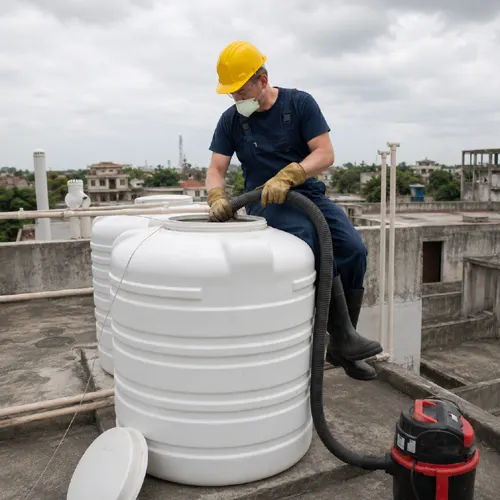
One piece plastic tanks, often white or blue, are common on villa roofs. They are light, affordable and smooth inside. Their weak points are the lid and the fittings. Lids warp in the sun, seals harden, and insect screens degrade, letting dust and insects in. A tank that looks fine from outside can hold a surprising floor layer of sediment if its lid has not sealed for a year.
Concrete tanks
Concrete ground tanks are found in many older buildings and some villas. They are strong and keep water cool, but they can develop hairline cracks and surface erosion over time, which harbour bacteria and can let groundwater in. When a concrete tank is emptied for cleaning, the walls and floor deserve a careful inspection, with defects photographed for the owner.
Cleaning the whole system together
Whatever the materials, the tanks in one property are connected. Cleaning the roof tank while leaving the ground tank dirty sends sediment straight back up within weeks. The right approach is to clean every tank in the same visit, in sequence, so the system starts clean. The pump room sump pit is usually checked at the same time. Our water tank cleaning and disinfection service covers all three materials with methods matched to each.
Services That Help
- Water Tank Cleaning & Disinfection, Sediment removal, full scrubbing and measured chlorine disinfection for roof and ground tanks, so every tap in the property receives water from a clean vessel.
- Sump Pit Cleaning, Basement and car park sump pits emptied of sludge and sand, washed down, and pump floats checked, so the pumps run the day the water arrives.
Questions About This Topic
Which water tank material is best for a Dubai villa?
Each has trade offs. Polyethylene is light and affordable, GRP suits larger custom sizes, and concrete is durable but harder to repair. More important than the material is a well sealed lid, intact insect screens, shade where possible, and cleaning every six months.
Why is my roof tank water warm in summer?
A roof tank sits in direct sun, so the water inside heats up through the day. Shading the tank or insulating it helps. Warm water also speeds up bacterial growth, which is one more reason to keep the tank cleaned and disinfected on schedule.